 Deutsch
 English
 Français

Take a look at our case study from the field of poster research to see how you can achieve better conspicuity quickly and cost-effectively thanks to insights from predictive eye tracking. (Study in German).
Predictive Eye Tracking
Fast results thanks to artificial intelligence
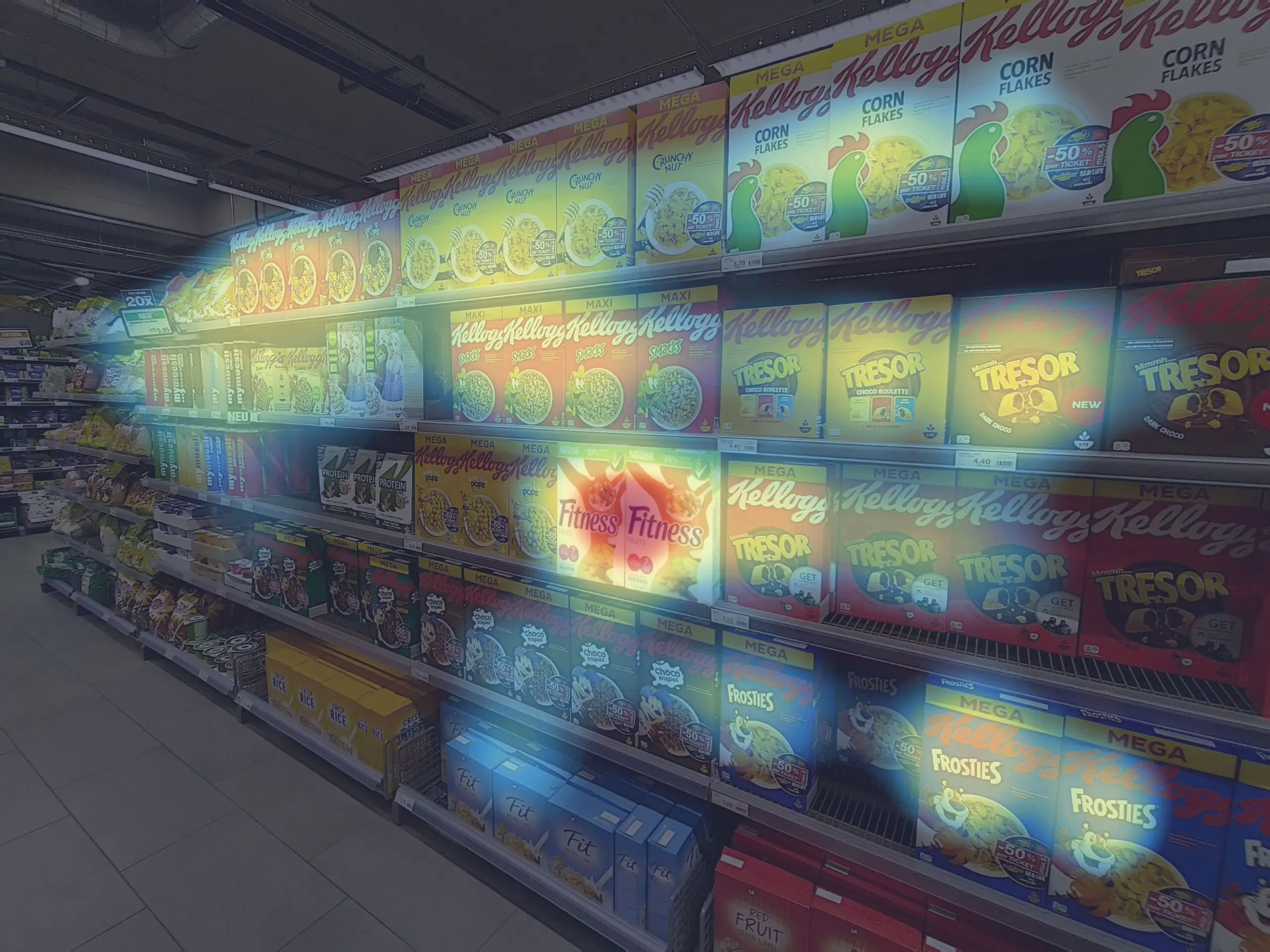
Predictive eye tracking analyses where people look in the first few seconds – for example at an advertising poster. It is a methodology based on training data and artificial intelligence. Test subjects are no longer necessary with this approach. The studies can thus be carried out in less time and at lower cost than conventional eye tracking studies.

Wide range of applications
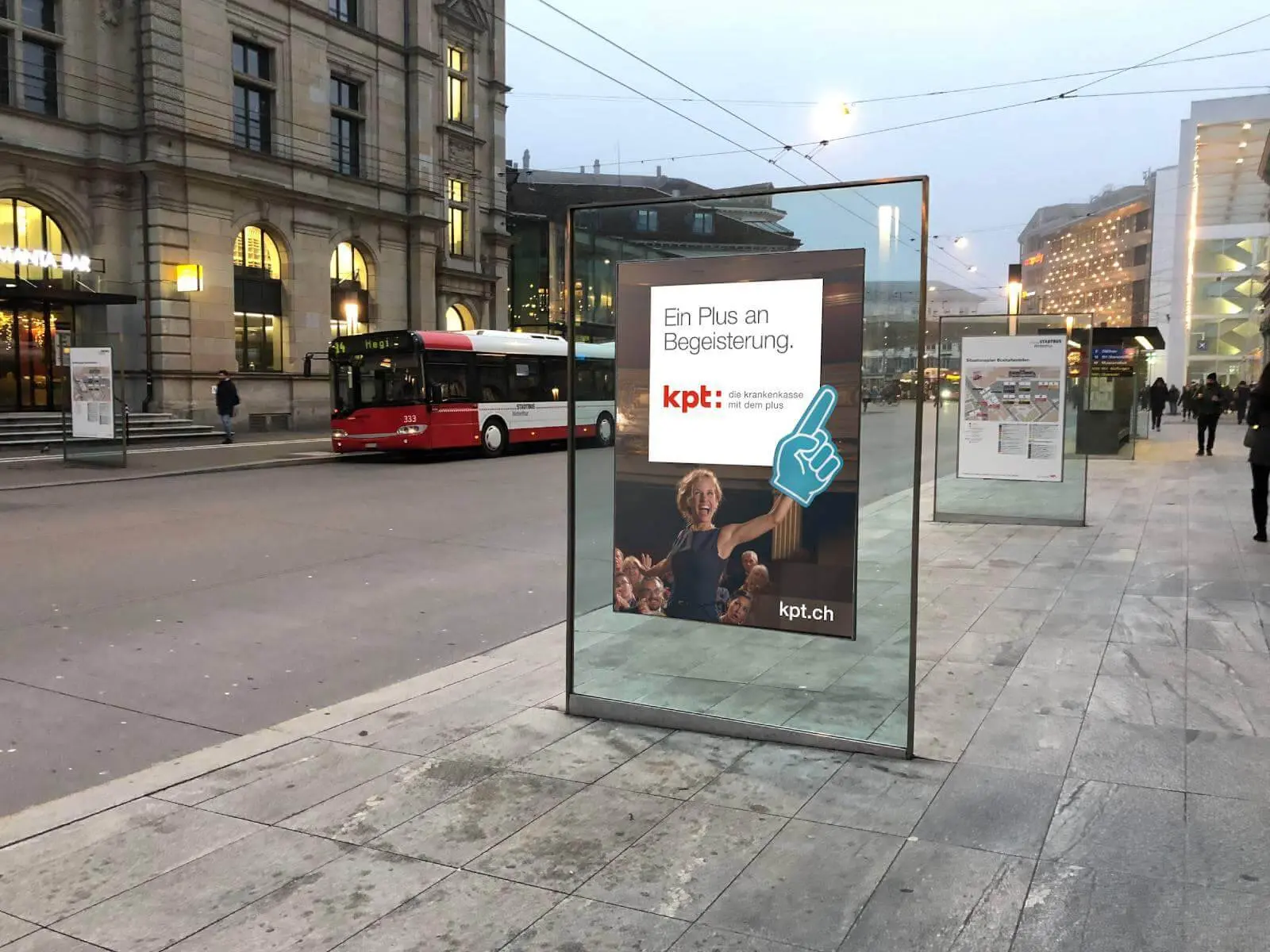
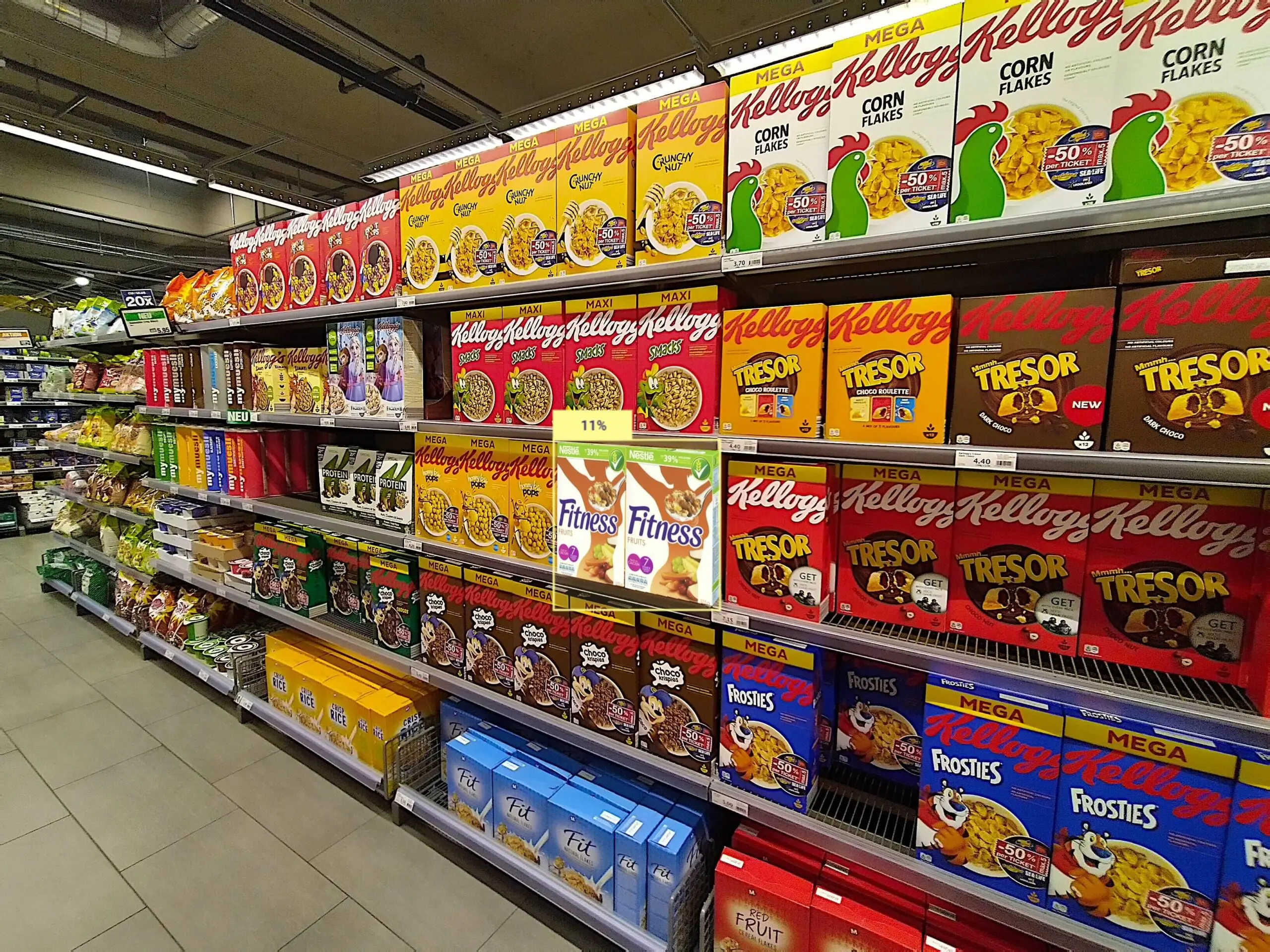
Products, advertising, signs, lettering and shop windows should be eye-catching to get noticed. With predictive eye tracking, conspicuity can be analysed and compared with other variants and benchmarks. Insights from predictive eye tracking studies directly help to optimise layout and design.
The methodology provides insights in different areas:

Advertisements (billboards, ads, spots, etc.)
Websites
Applications
Shop windows and shelves
Packaging design
Signage
Frequently asked questions
FAQs
Predictive Eye Tracking is an AI-based method for analyzing visual attention. A model trained on data from several thousand traditional eye-tracking studies predicts which areas of an image people are likely to look at. This makes it possible to determine, for example, whether the brand logo, message, or central image on a poster stands out sufficiently.
People often view posters only briefly and in passing. A poster therefore needs to attract attention quickly and communicate its key messages clearly. Predictive Eye Tracking can assess how well a poster stands out in a realistic advertising environment and at different viewing distances. The analysis also reveals the visual hierarchy of the individual elements in the advertising creative, showing whether, for example, the brand, message and visual motif attract sufficient attention.
Heat maps show which areas of a poster receive the most attention. The Share of Attention indicates the proportion of attention individual elements—such as the logo, headline, or product—receive in the first few seconds. In poster analyses, intervista supplements these results with its own metric: The Poster Attention Index shows how eye-catching a poster is in a realistic advertising environment. The evaluation is conducted for different viewing distances. Proprietary benchmarks also allow for comparison with other advertising creatives tested by intervista.
Predictive Eye Tracking can predict, with accuracy of up to 95%, which areas of an image people notice in the first few seconds of viewing. Prediction accuracy decreases when people view the advertising creative for longer and more closely. In addition, this method cannot determine whether an advertisement is liked, understood, evokes emotions or influences purchase intent. To answer these questions, we recommend combining this method with a qualitative or quantitative advertising pre-test.
Results are typically available within three to five business days. The cost depends on the number and type of advertising materials to be analyzed. For example, an analysis of a single poster—including an environmental analysis, reporting, and benchmarks to contextualize the results—costs CHF 2,500. Additional advertising creatives can be cost-effectively integrated into the analysis.

Beat Fischer
We’re happy to advise you!
Feel free to give me a call or send me an email. I look forward to hearing from you and discussing your research needs.